


Most B2B companies think business development means one thing:
Find prospects → send outreach → pitch → follow up → repeat.
That’s the standard model.
And yes, it works… sometimes.
But it’s also slow, crowded, and exhausting. You’re constantly trying to earn attention from people who don’t know you, don’t trust you, and don’t have time.
There’s a smarter way.
Instead of chasing buyers directly, you can build a system where business comes to you through trusted channels.
That system is called:
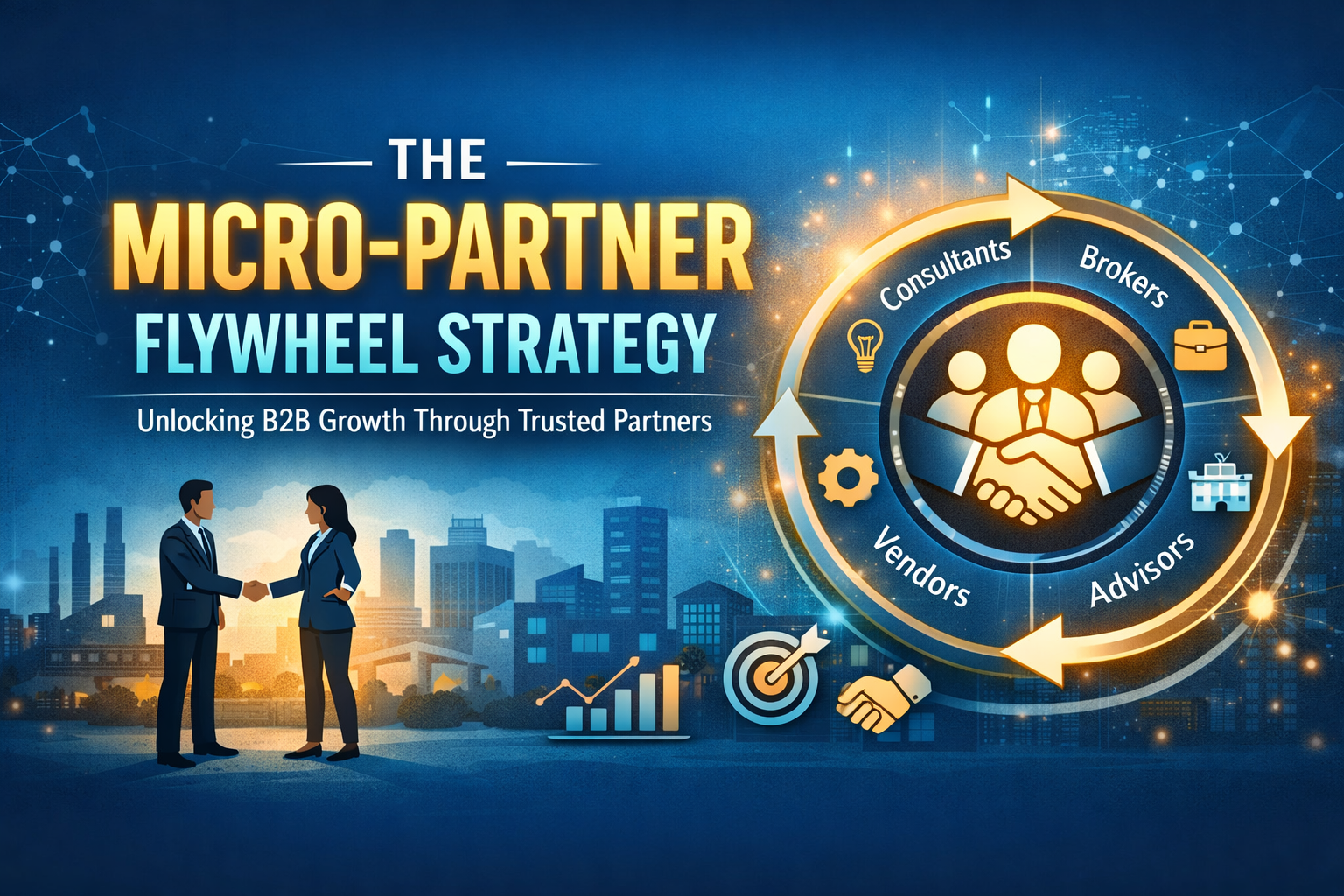
The Micro-Partner Flywheel
This is one of the most underused, highest-leverage business development strategies in B2B.
Let’s walk through it like a lesson, a manual, and a plan you can actually execute.
Lesson 1: Understand the Truth About B2B Buying
In B2B, people don’t buy the way consumers buy.
Nobody wakes up and casually thinks:
“Today feels like a great day to spend $300,000 on a new energy system.”
B2B buying is slow because it involves:
-
Risk
-
Reputation
-
Internal approval
-
Long-term consequences
-
Fear of making the wrong decision
So the real barrier isn’t interest.
The real barrier is trust.
That means your job in business development is not just getting meetings.
Your job is reducing perceived risk.
And the fastest way to reduce risk is simple:
Arrive through someone they already trust.
That’s where micro-partners come in.
Lesson 2: What Is a Micro-Partner?
A micro-partner is not a massive channel partner or a corporate alliance.
A micro-partner is much smaller and much more powerful.
A micro-partner is:
Anyone already serving your ideal customer who can introduce you naturally.
They live inside the customer’s world already.
Examples include:
-
Contractors
-
Consultants
-
Brokers
-
Engineering firms
-
Service providers
-
Niche software vendors
-
Advisors
-
Specialists
These people don’t need to be famous.
They just need to be trusted.
Because when a trusted person says:
“You should talk to Phil”
That introduction is worth more than 100 cold emails.
Lesson 3: Why This Strategy Works Better Than Cold Outreach
Cold outreach starts at zero.
No relationship. No context. No trust.
Micro-partner introductions start at 60%.
The prospect thinks:
“If my advisor brought this up, it’s probably legitimate.”
This changes everything.
Instead of sounding like a salesperson, you sound like a solution.
Instead of interrupting, you’re being recommended.
That’s the core advantage:
Micro-partners let you borrow trust instead of trying to manufacture it.
The Micro-Partner Flywheel Plan
A Step-by-Step Execution Guide
Now let’s turn this into an actual plan you can follow.
Step 1: Map the Buyer’s Trust Ecosystem
Start with one question:
Who does my ideal customer already listen to?
Not influencers.
Not podcast hosts.
Real-world professionals already involved in their decisions.
For example:
If you sell into industrial facilities, the trust ecosystem might include:
-
Electrical contractors
-
Facility engineers
-
Energy consultants
-
Maintenance vendors
-
Procurement advisors
If you sell into commercial real estate, it might include:
-
Property managers
-
Leasing brokers
-
Capital improvement consultants
-
HVAC service firms
The goal is to identify the people who are already in the room before you ever show up.
Step 2: Build a Partner List, Not a Prospect List
Most business developers build lead lists.
This strategy starts differently.
You build a list of 25–50 micro-partners.
Your ideal micro-partner meets three criteria:
-
They already work with your buyers
-
They are trusted in that circle
-
They are not competing with you
Think of it like this:
Prospects are doors.
Micro-partners are the people with keys.
Step 3: Reach Out Without Pitching
Here’s the mistake most people make:
“Hey, we do X. Want to partner?”
That gets deleted instantly.
Instead, your outreach should sound like curiosity and relevance.
A better opener is:
“Quick question — do you ever run into clients dealing with [specific problem]? I’m seeing it constantly, and we’ve found a clean way to solve it.”
Notice what you’re doing:
-
You’re not selling
-
You’re not asking for referrals
-
You’re starting a professional conversation
Micro-partners don’t want vendor spam.
They want solutions that make them look smart.
Step 4: Give Them a Referral Asset
Never ask:
“Can you send me business?”
That’s uncomfortable.
Instead, give them something useful.
A referral asset is a tool they can hand to clients.
Examples:
-
A one-page checklist
-
A short diagnostic
-
A cost-saving calculator
-
A “client readiness” assessment
-
A simple explainer deck
This is the mindset:
Don’t ask for referrals. Equip referrals.
Make it easy for them to say:
“Here — talk to these guys.”
Step 5: Teach Them the Trigger Moment
Micro-partners refer business when they recognize a moment of need.
So you must teach them the trigger.
For example:
“Anytime a facility mentions outages, rising energy costs, expansion, or new sustainability pressure — that’s when we can help.”
Now they have a mental filter.
You’ve turned them into a radar system.
They start noticing opportunities for you everywhere.
Step 6: Respond Like a Professional, Not a Lead-Chaser
When a partner makes an introduction, speed matters.
You should respond within an hour whenever possible.
And you should keep the partner informed.
A simple update goes a long way:
“Thanks again — we had a great first call. I’ll keep you posted.”
Partners want to feel included, not used.
Treat their intros like gold.
Because they are.
Step 7: Turn One Partner Into a Flywheel
Once one micro-partner relationship works, you now have proof.
Now you replicate:
Same niche
Same buyer
Same trigger
Same referral asset
One becomes five.
Five becomes twenty.
This is where the flywheel begins:
Partner → Intro → Win → Proof → More Partners → More Intros
Eventually, outbound becomes optional.
That’s real leverage.
The Real Business Development Shift
Most people ask:
“How do I get more leads?”
The better question is:
How do I get placed inside the trust network of my market?
That’s what the Micro-Partner Flywheel does.
It builds business development that compounds.
Not hustles.
Final Word from PositivePhil
If you want a strategy that is genuinely different from generic cold outreach…
Stop shouting into the void.
Start building quiet trust channels.
Because in B2B:
The best deals don’t come from convincing strangers.
They come from being introduced.