

Everyone is talking about AI. Almost nobody is talking about what it takes to keep AI running. Behind every chatbot answer, every model being trained, there is a data center working around the clock, and that data center has a heat problem and a water problem that most people never stop to think about.
The numbers on this are bigger than most people realize. Large data centers can use around 5 million gallons of water a day. Global data center electricity demand is expected to double by 2030, and this year alone, electricity demand tied to data centers is projected to grow 26 percent. The whole sector is expanding at close to 14 percent a year through 2030, which adds up to nearly 3 trillion dollars in new infrastructure. That is not a typo. Trillion, with a T.
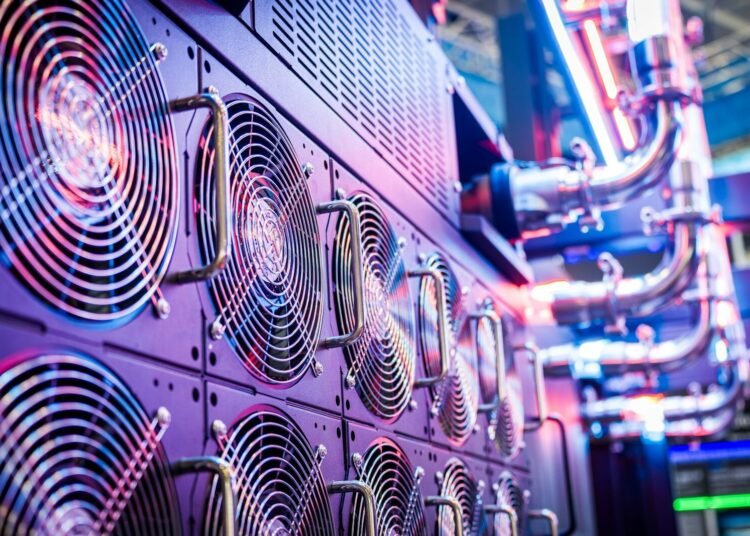
Here is why it is happening. Chips are getting hotter, fast. A normal server rack used to run somewhere around 20 to 30 kilowatts, and a fan and some air conditioning could handle that fine. AI clusters have blown past that. Some of the newest AI hardware is pushing rack density past 100 kilowatts, with the latest designs hitting 142 kilowatts per rack, and plans already on the table to scale toward 1 megawatt per rack. Air alone cannot pull that much heat out of a room anymore. It is not even close.
So the industry is moving to liquid cooling, and fast. Direct-to-chip cooling sends coolant straight to the hottest part of the server instead of trying to cool the whole room around it. At the center of that system sits something called a coolant distribution unit, or CDU. Think of it as the heart of the cooling loop. It pumps coolant through isolated circuits and constantly adjusts flow and temperature to keep everything stable. A good system even keeps the secondary loop above the dew point so nothing condenses where it shouldn’t, right next to a rack full of very expensive, very sensitive hardware.
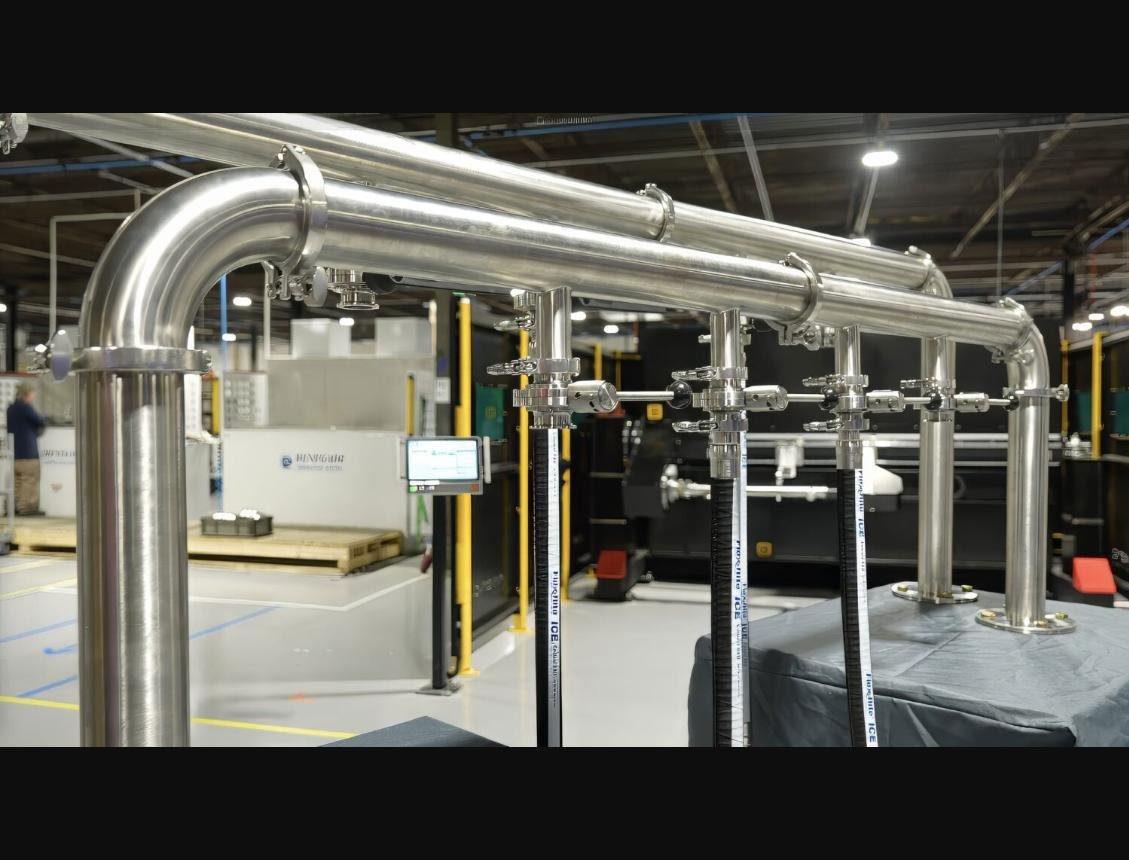
None of that works without the right materials. Most of these systems are being built with stainless steel, and there is a real reason for that. It is hygienic, it holds up against a wide range of coolants without breaking down, and it resists corrosion far better than the copper and brass that used to be standard. A lot of these builds use 316 grade stainless specifically, because it holds up even better under pressure and repeated cycling. It shows up everywhere in the system. The tubing. The fittings. The control valves. The filters and strainers. The pumps. All the small parts most people will never see, quietly holding together a system moving thousands of gallons of coolant nonstop, under pressure, with zero room for a leak next to hardware worth millions of dollars.
This is where sustainability stops being a buzzword and starts being real engineering. It is not just solar panels and recycling bins anymore. It is how we build the physical backbone of the AI era without draining the water table, overloading the grid, or steamrolling the communities these buildings go up in. The companies getting this right are the ones pairing smart design with materials built to actually last, not just pass inspection on day one.
This industry is still being figured out in real time, right now, this year. The next decade of data center construction is going to be one of the biggest infrastructure stories in this country, and most people will never notice it happening. It is going up in fields and industrial parks all over the map, pulling water and power from the same grids and towns the rest of us live in. Pay attention to it. It is closer to your backyard than you think.
Phil