

It’s not.
In reality, most people stay stuck for a far less dramatic reason: they operate within a narrow band of predictable behavior. Day after day, year after year, they make decisions that feel safe, reasonable, and justified—but ultimately keep them exactly where they are.
This isn’t about intelligence or capability. It’s about patterns.
And until those patterns change, outcomes don’t.
The Predictability Problem
If you zoom out and look at the average person’s daily decision-making, a pattern emerges.
They consume more than they create.
They plan more than they execute.
They hesitate more than they act.
None of these behaviors feel harmful in isolation. In fact, they often feel productive. Research feels like progress. Thinking feels like preparation.
But over time, these tendencies compound into stagnation.
Predictability becomes the enemy of progress.
Because if your actions are predictable, your results will be too.
The Comfort Economy
We live in a world optimized for comfort.
You can learn anything without doing anything.
You can watch others succeed without taking a single risk yourself.
You can stay informed, entertained, and distracted indefinitely.
This creates what can only be described as a “comfort economy”—a system where people are constantly busy but rarely moving forward in any meaningful way.
The result is a subtle but dangerous trap:
You feel like you’re trying… without actually changing your trajectory.
Why Information Isn’t the Bottleneck
Most people don’t have an information problem.
They have an action problem.
At this point, the fundamentals of building wealth, advancing a career, or growing a business are widely understood:
-
Take initiative
-
Build relationships
-
Create value
-
Move quickly
Yet execution remains rare.
Why?
Because action introduces friction. It creates uncertainty. It exposes you to judgment, rejection, and failure.
And most people unconsciously prioritize emotional comfort over long-term gain.
The Real Cost of Playing It Safe
Playing it safe feels responsible.
But over time, it carries a significant hidden cost.
When you avoid risk, you also avoid:
-
High-leverage opportunities
-
Meaningful visibility
-
Exponential growth
You stay in environments where expectations are low and outcomes are capped.
Meanwhile, individuals who are less experienced—but more willing to act—begin to outpace you.
Not because they’re better.
Because they’re faster.
In today’s environment, speed compounds just as powerfully as capital.
The Compounding Effect of Bold Action
There’s a fundamental shift that separates people who remain stuck from those who build momentum:
They stop optimizing for the “best” decision and start prioritizing decisive action.
Instead of waiting for certainty, they move with partial information.
Instead of avoiding mistakes, they shorten the feedback loop.
Instead of protecting their image, they focus on building capability.
This creates a compounding effect.
Each action leads to:
-
New information
-
New relationships
-
New opportunities
Over time, this acceleration becomes difficult to compete with.
A Practical Framework for Breaking the Cycle
Breaking out of stagnation doesn’t require a complete life overhaul. It requires a shift in operating behavior.
Start with three adjustments:
1. Increase Output
Focus on producing, not consuming.
Send more messages. Make more calls. Build more things.
2. Reduce Decision Latency
Shorten the gap between thinking and acting.
If something makes sense, execute before overanalyzing.
3. Normalize Discomfort
Use discomfort as a signal—not a stop sign.
If an action feels slightly uncomfortable, it’s often the right direction.
Where This Shows Up in Business (And Energy)
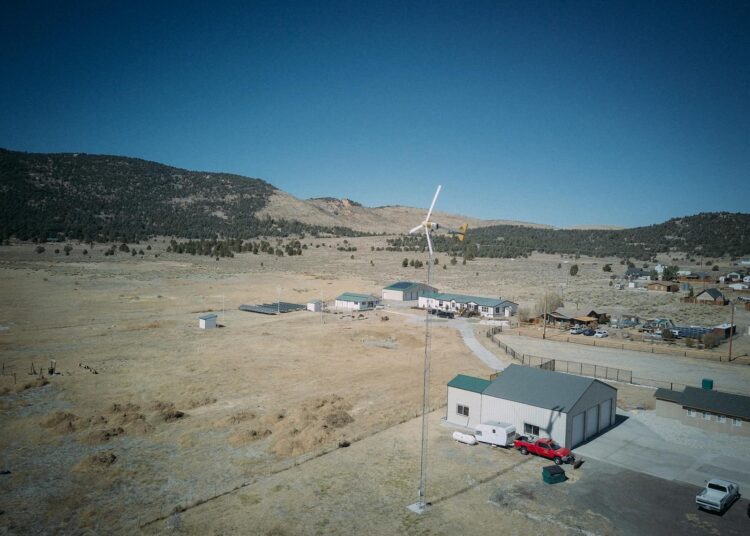
This dynamic is especially visible in industries with high inertia—like energy, infrastructure, and industrial operations.
Companies often delay decisions around:
-
Energy cost reduction
-
Onsite power generation
-
Resilience planning
Not because the economics don’t work—but because action requires coordination, change, and perceived risk.
The irony is that delay itself is often the most expensive decision.
Energy costs compound.
Grid instability increases.
Missed opportunities don’t come back.
The businesses that move early—who evaluate, act, and iterate—position themselves ahead of the curve.
The rest keep “reviewing options.”
Final Thought: The Pattern Break
Most people don’t need a new strategy.
They need to break a pattern.
The moment you:
-
Act faster
-
Take slightly bigger risks
-
Prioritize momentum over perfection
You separate yourself from the majority.
Not overnight—but inevitably.
Because while others are waiting to feel ready…
You’re already in motion.